

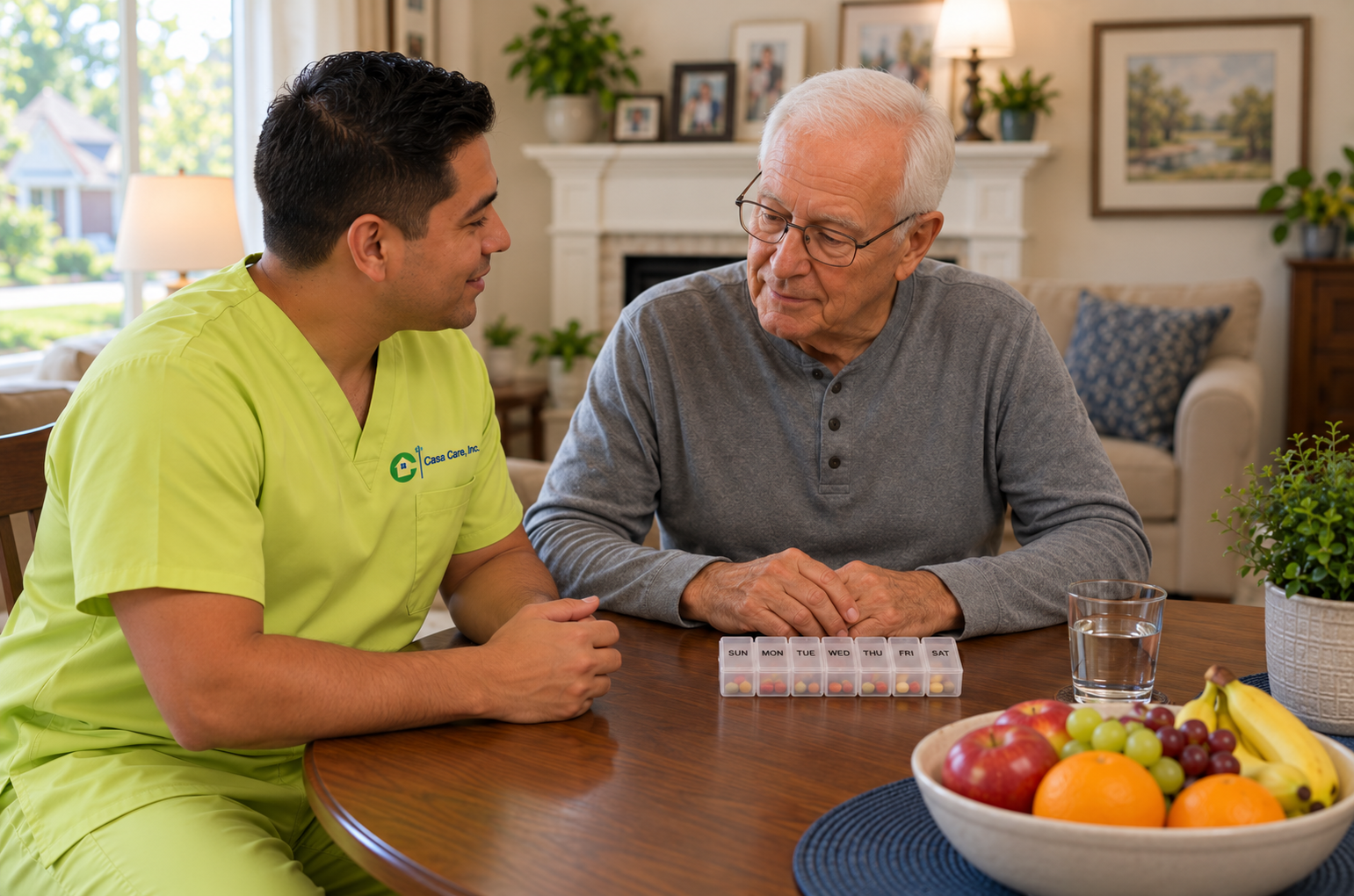
Keeping track of medications can become more challenging as daily routines change with age. Different schedules, multiple prescriptions, memory changes, and busy days can make it easier to lose track of whether it is time for medication. For families considering home care in Hoffman Estates, IL, nonmedical medication reminders can add helpful structure to the day while allowing seniors to remain involved in their own routines and continue living comfortably at home.
At Casa Care, Inc., we believe everyday support should respect each person’s dignity, preferences, and independence. Medication reminders are one of the daily activities our hourly caregivers can assist with as part of a customized care plan. Our approach combines personalized support with compassionate caregivers who are background-checked and matched thoughtfully to client needs.
What Are Medication Reminders in Home Care?
Medication reminders are nonmedical prompts that help seniors remember when it is time to take their medications according to an established routine. They may be useful when someone occasionally loses track of time or benefits from another person drawing their attention to a scheduled task.
At Casa Care, Inc., reminder support focuses on prompting rather than managing medication. Understanding that distinction helps families set clear expectations about the caregiver’s role.
- A reminder draws attention to the time: A caregiver offers a prompt based on the existing routine.
- The senior remains involved: The prompt gives the individual an opportunity to recognize and carry out their own task.
- A prompt does not confirm completion: Offering a reminder alone does not establish that medication was taken.
- Clinical questions require qualified guidance: Caregivers do not decide which medication to take, change dosages, or interpret treatment instructions.
Clear Boundaries for Nonmedical Support
Reminder support should not be described as prescribing, administering, or managing medications. Its purpose is to help someone remember an existing responsibility within the agreed care plan. Families seeking hands-on medication assistance should clarify what services are required rather than assuming reminders include that help.
Are Medication Reminders Enough for Every Senior?
A verbal prompt may be helpful for someone who can manage their medication routine but occasionally forgets the time. If a person cannot understand or complete the task after a reminder, families should discuss those difficulties with an appropriate healthcare professional to understand what additional support may be needed.
Recognizing what reminders provide helps families choose assistance that fits their loved one’s abilities. Clear expectations keep nonmedical support focused on its intended role while leaving medication decisions to qualified professionals.
Consistent Routines Can Make Medication Schedules Easier
Daily habits can provide useful points of reference throughout the day. Waking up, getting dressed, eating meals, and settling in for the evening already have a familiar order for many seniors. A medication reminder can fit within that order, making it one part of the day’s routine rather than another detail to manage separately.
Caregivers can support those routines in several ways, depending on the individual care plan:
- Morning preparation: Assistance with getting dressed or personal care can help the day begin at a comfortable pace.
- Meals and household tasks: Help with meal preparation or light cleaning can keep everyday responsibilities manageable.
- Activities outside the home: Transportation and errands can be planned around the client’s usual schedule.
- Companionship: Conversation and shared activities can make care visits feel familiar and reassuring.
Consistent, reliable care can support familiar daily routines. A caregiver can offer medication prompts at the appropriate times while also helping with other agreed-upon tasks. This can be especially useful when a senior has several everyday responsibilities to remember.
Because no two schedules are identical, we work with families to plan care around each client’s established habits. Hourly support can include companionship, personal care, transportation, respite support, meal preparation, cleaning, errands, and medication reminders according to individual needs.

Medication Reminders Can Complement Other Daily Support
A medication reminder may be one small part of a care visit, but it can fit naturally alongside other forms of assistance.
Support While Getting Ready for the Day
A caregiver might provide companionship while a client gets ready in the morning. Depending on the care plan, the caregiver may also help with dressing or meal preparation. A medication reminder can fit into that established routine at the appropriate time.
Assistance With Everyday Tasks
When routine tasks begin to feel overwhelming, help with light housekeeping, meals, or errands can ease the day’s responsibilities. Rather than focusing on one task in isolation, personalized care considers how daily needs fit together. The caregiver can provide a reminder while supporting other agreed-upon activities.
Companionship Throughout Care Visits
Regular conversation and shared activities can make visits feel comfortable and familiar. Companion care may include walks, reading, errands, conversation, or friendly games. For seniors experiencing forgetfulness or cognitive decline, a consistent caregiver presence may be particularly valuable.
Details to Share When Planning Medication Reminders
Before arranging reminder support, families can discuss how the senior currently manages their routine and where a caregiver’s prompts would be useful. Clear expectations help everyone understand when assistance is needed and how to provide it respectfully.
| Planning Detail | What Families Can Share |
|---|---|
| Established schedule | When reminders are needed based on the senior’s existing medication routine |
| Reminder preferences | Whether the senior prefers a gentle verbal prompt or another familiar cue |
| Visit coverage | Which reminder times fall within scheduled care visits |
| Family contact | Who should receive questions or concerns about the routine |
| Routine changes | How changes to the reminder routine will be shared |
Discussing these details can help prevent confusion between family members and caregivers. Questions about medication instructions should go to the prescribing clinician or pharmacist, while the home care plan focuses on nonmedical reminder support.
A Respectful Approach to Medication Reminders
How a reminder is delivered matters. A calm tone, clear wording, and time to respond can help seniors participate in their routine while preserving their sense of choice and independence.
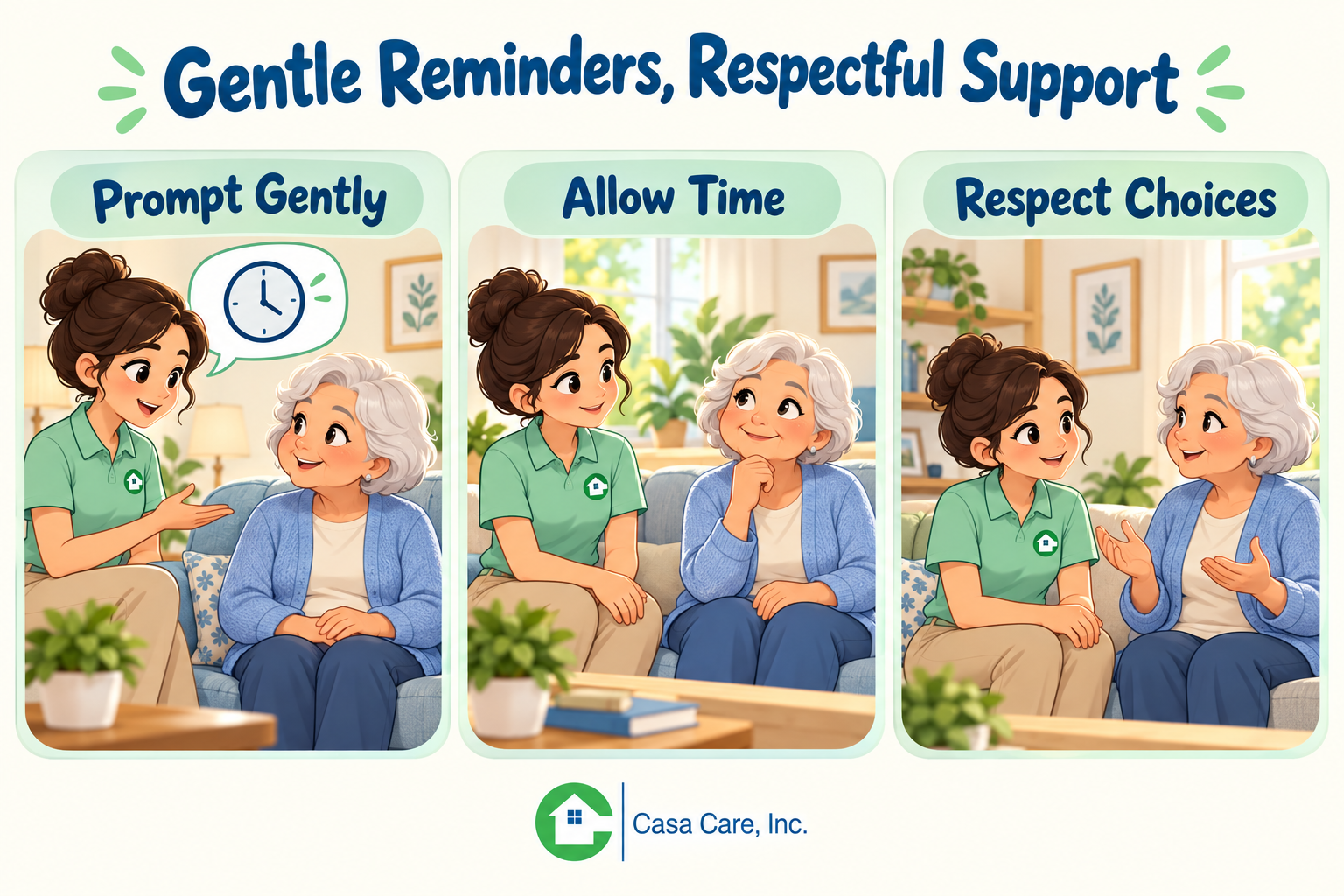
A reminder should feel like supportive assistance within the senior’s day. Caregivers can listen to preferences and share concerns through the agreed communication process when the routine needs further attention.
Reviewing Medication Reminder Support with Your Family
Once reminder support is in place, occasional conversations can help families understand whether the arrangement continues to suit their loved one. These discussions give seniors an opportunity to share their experience and identify practical adjustments to care visits.
Does the Visit Schedule Cover the Times Support Is Needed?
Families can review whether scheduled visits include the times when their loved one benefits from a reminder. If support is needed outside those visits, discussing coverage can help clarify who will be available.
Is Your Loved One Comfortable with the Reminder Approach?
Ask whether reminders feel helpful and are delivered in a way your loved one prefers. Some seniors appreciate a brief verbal prompt, while others may want more privacy. Their feedback can guide how caregivers offer support.
Have Daily Changes Affected the Care Arrangement?
New appointments, outings, or changes in family availability may affect when care visits are useful. Families can discuss adjustments to visit times and reminder support while keeping the senior’s existing medication instructions separate from caregiving decisions.
Reviewing these practical details helps reminder support remain responsive to everyday life. The goal is to keep assistance useful, clearly coordinated, and respectful of the senior’s preferences.
Plan Medication Reminders Around Your Loved One’s Routine
Medication reminders can be a simple but meaningful part of helping seniors maintain an organized daily routine. When combined with companionship, personal assistance, meal preparation, errands, and other appropriate nonmedical services, reminders can help make everyday responsibilities easier to manage without unnecessarily taking control away from the individual. If your family is considering home care Hoffman Estates, IL, Casa Care, Inc. can create a personalized plan that incorporates medication reminders into your loved one’s established routine. Call (224) 238 7171 to schedule a free in-home consultation and speak with our team about dependable daily support designed around your loved one’s comfort, dignity, and independence.
